
Business
Herat company produces 300 solar panels a day

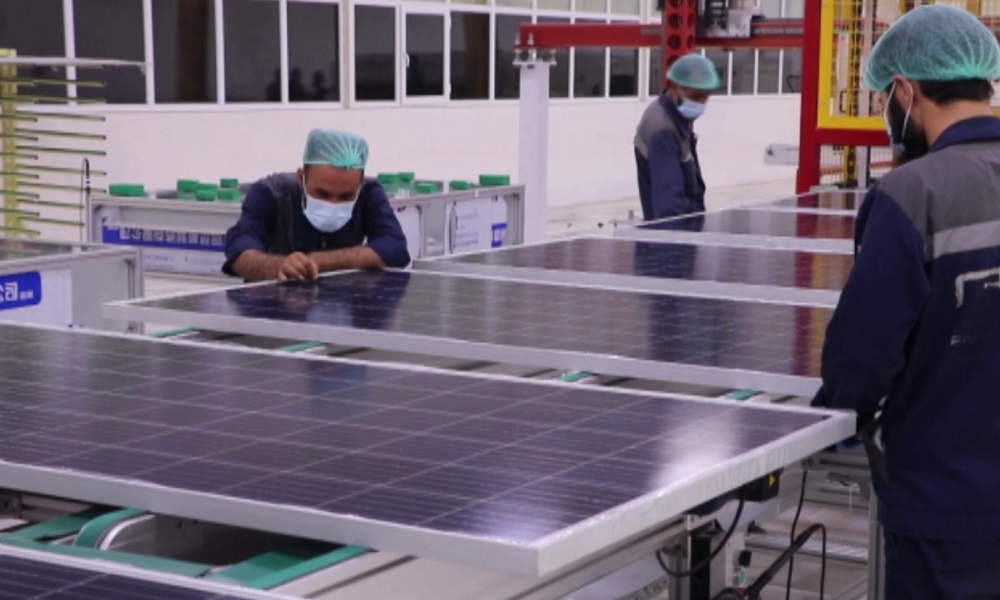
A private company in Herat province is producing almost 300 solar panels per day, each of which has a capacity of providing up to 650 watts of electricity.
The factory officials say the solar panel that they produce is competing with regional companies in terms of quality.
According to them, more than $5 million has been invested in this factory.
“The main goal is that we create jobs and the second goal is that those companies should start operations in the country in which people’s needs are their priority,” said Wahidullah Bromand, the general manager of the solar panel production for the company.
“The devices inside this factory do not exist even in our neighboring countries such as Iran, Pakistan, Turkmenistan and Tajikistan,” said Ghulam Rasool Haidari, in charge of the technical department of the solar production for the company.
“Regarding the quality of the solar panels that we produce, they are produced with a 25-year warranty in accordance with national and international standards,” he said.
This factory has already been able to meet the needs of the Herat market and 19 other provinces.
Meanwhile, the Ministry of Industry and Commerce has repeatedly emphasized the need for people to use domestic products.
As long as we do not bring changes, no one will change our situation, for the growth of industry and economy, Afghanistan’s industry plays a very important role,” said Mohammad Zubair Deen Parwar, head of International Trade Department for MoIC.
Currently, more than two hundred factories are active in Herat Industrial City, and most of these factory owners are trying to supply quality goods to the market.
However, people’s trust reportedly in domestic products has not yet been fully gained.




Business
Afghanistan showcases industry at key Central Asia expo
The exhibition brings together government officials, investors and manufacturers from across Central Asia and beyond, including participants from Russia, Belarus, Kazakhstan, Kyrgyzstan and Tajikistan.
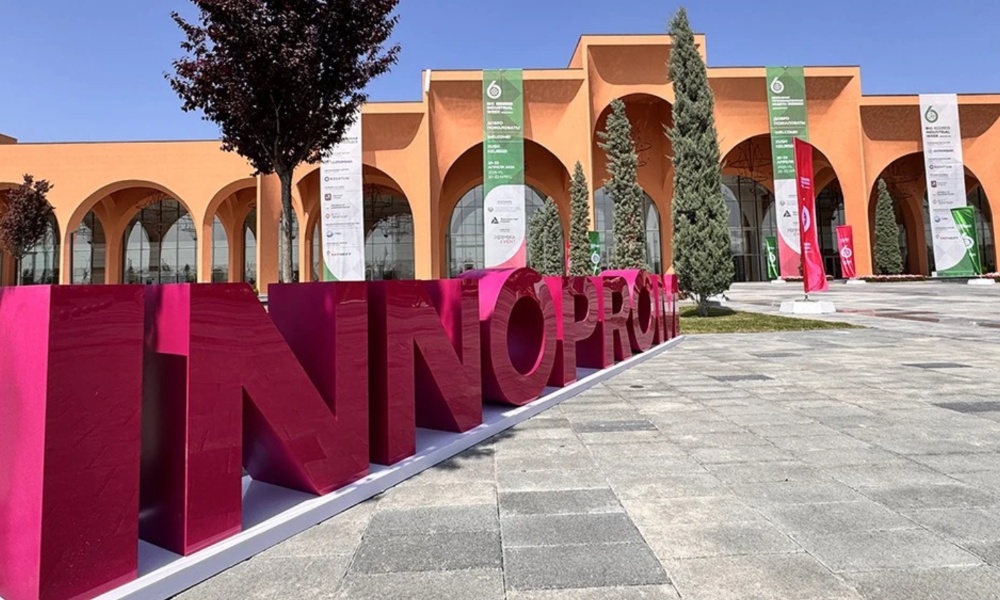
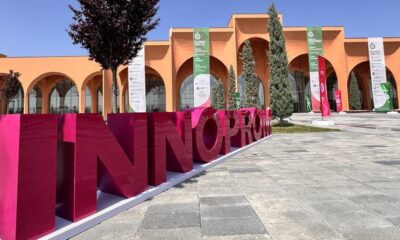
Afghanistan is making a notable showing at the INNOPROM Central Asia, one of the region’s largest industrial platforms, as Minister of Industry and Commerce Nuruddin Azizi travels to Uzbekistan to attend the event.
The exhibition brings together government officials, investors and manufacturers from across Central Asia and beyond, including participants from Russia, Belarus, Kazakhstan, Kyrgyzstan and Tajikistan.
It is aimed at promoting industrial development, showcasing advanced technologies and expanding regional investment cooperation.
According to Afghanistan’s Ministry of Industry and Commerce, more than 60 Afghan companies are taking part, representing sectors such as cotton, coal, pharmaceuticals and agricultural products.
Officials say the participation highlights efforts to strengthen trade ties and position Afghanistan as a growing economic partner in the region.
INNOPROM Central Asia is widely regarded as a key platform for fostering industrial collaboration and unlocking new investment opportunities across Central Asia.
Business
Afghan commerce minister highlights trade trust and market stability at Antalya Forum
“The message from the Islamic Emirate of Afghanistan is centered around peace and peaceful coexistence,” Azizi stated.
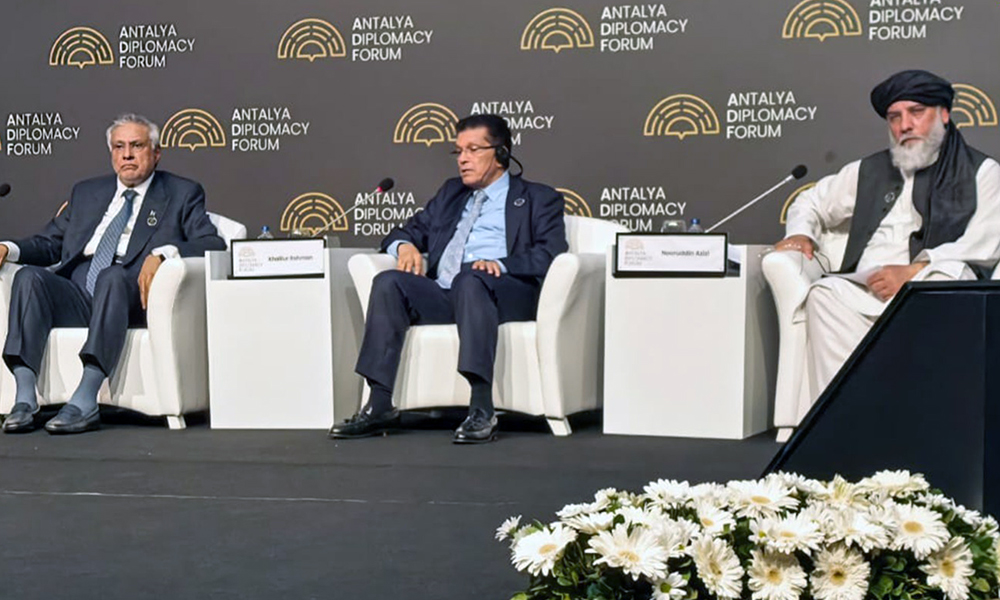
Afghanistan’s Minister of Industry and Commerce, Nooruddin Azizi, underscored the importance of trust in trade and regional stability during a high-level panel discussion titled “Trust in Trade: The Future of Economic Integration and Stability in South Asia” at the 5th Antalya Diplomacy Forum in Türkiye.
In his remarks, Azizi emphasized the critical need for peace, stability, and stronger human connections between nations. He noted that the Afghan people have faced nearly five decades of hardship, and continue to endure challenges, including the ongoing issue of frozen assets, which limit the country’s economic potential.
“The message from the Islamic Emirate of Afghanistan is centered around peace and peaceful coexistence,” Azizi stated, highlighting the alignment of these values with both religious teachings and the aspirations of the Afghan people.
When asked about the impact of recent regional developments on fuel and liquefied gas prices, Azizi reassured attendees that Afghanistan had already taken proactive steps to mitigate potential disruptions. He shared that while global fuel prices had surged, Afghanistan’s fuel price increase remained modest—only 3 to 5 percent.
“This demonstrates effective planning and market management in securing the country’s fuel and gas supplies,” he added.
Azizi also expressed his gratitude for the Antalya Diplomacy Forum, praising Türkiye for its efforts in tackling global and regional challenges, including its stance on the situation in Gaza.
The Antalya Diplomacy Forum, which continues to serve as an essential platform for fostering regional dialogue, remains focused on economic cooperation, political stability, and addressing pressing global issues.
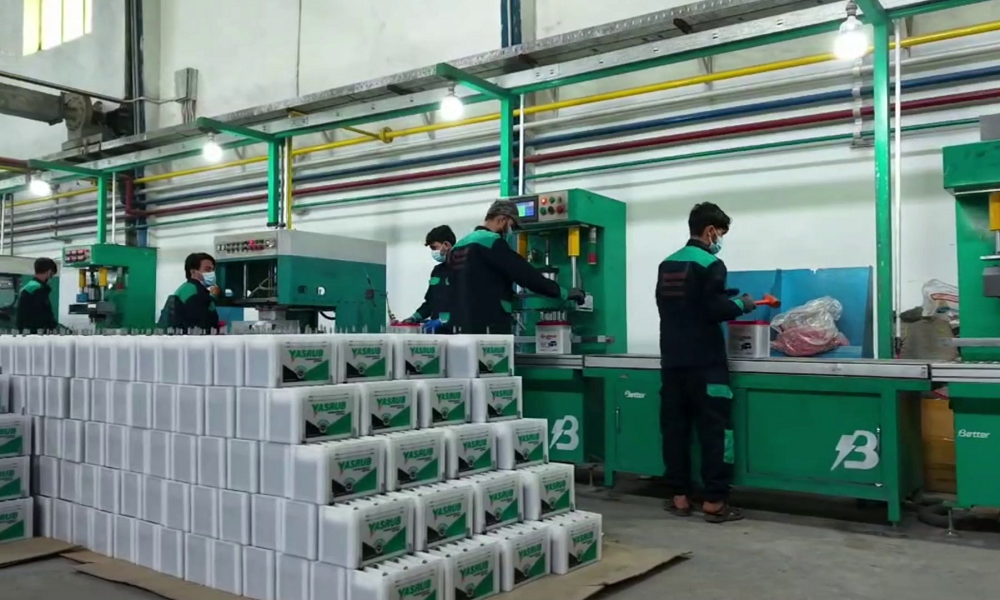
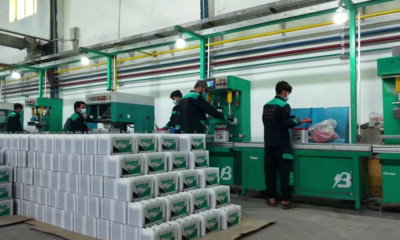
Afghanistan is making steady progress toward self-sufficiency in car battery production, officials from the Chamber of Industries and Mines said.
They noted that with consistent support from the Ministry of Industry and Commerce, particularly in facilitating investment, the country could become both a producer and exporter of car batteries by the end of the current year.
According to the Union of Car Battery Manufacturing Factories, a significant portion of domestic demand is already being met through local production, with full self-sufficiency expected in the near future.
Industry representatives also said Afghan manufacturers have begun exporting car batteries to countries in the Gulf region and parts of Europe, though further expansion depends on improved transport routes and export arrangements.
“Last year, for the first time in Afghanistan’s history, we exported car batteries abroad,” said Abdul Mateen Qalandari, Head of the Secretariat of the Chamber of Industries and Mines. “This year, we expect to export hundreds of containers.”
Manufacturers have called on the Ministry of Industry and Commerce to continue restrictions on lead exports and to prioritize the use of domestically produced car batteries in government procurement contracts.
Officials added that the number of car battery manufacturing factories is expected to reach 20 by the end of the year.
Afghanistan currently produces around 38,000 tons of car batteries annually, and industry leaders say local manufacturers have the capacity to further increase output.
“Factories are producing a wide range of car batteries in different sizes, meeting the needs of the domestic market,” said Abdul Salam Jawad Akhundzada, spokesperson for the Ministry of Industry and Commerce.
Officials from the Ministry of Economy emphasized that the development of domestic industries remains a top priority, adding that efforts are underway to create a more favorable environment for both domestic and foreign investors.
“In the past, car batteries were imported from countries such as Pakistan, Iran, Thailand, and China,” said Abdul Latif Nazari, Deputy Minister for Technical Affairs. “However, imports have now declined, and Afghanistan is on track to achieve self-sufficiency in this sector by the end of the year.”


Afghanistan, Belarus hold talks on fuel imports

Afghanistan showcases industry at key Central Asia expo

Webinar series highlights growing climate pressures on livelihoods in Afghanistan

Afghanistan Humanitarian Fund channeled $73.5 million to the needy in 2025

Kolkata Knight Riders and Punjab Kings win IPL double-header

IEA supreme leader orders replacement of foreign terminology in official documents

Russia deems US military presence in Afghanistan unacceptable

Afghanistan hosts inaugural Afghanistan–Central Asia Consultative Dialogue to strengthen regional cooperation

TAPI gas pipeline advances 25 km in Afghanistan

Afghani strengthens nearly 10% against US dollar amid banking sector reforms

Tahawol: Fragile ceasefire between Iran and US discussed

Saar: Fate of Kabul–Islamabad talks in China reviewed

Tahawol: Reasons behind re-blocking of Strait of Hormuz discussed

Tawsia: Uzbekistan’s interest in investing in Afghanistan discussed

Tahawol: Russia’s readiness to mediate between Kabul-Islamabad discussed
-
 Business3 days ago
Afghanistan moves toward self-sufficiency in car battery production
-

 Business4 days ago
Airspace transit fees generate revenue for Afghanistan as flight routes shift
-

 Business4 days ago
Central Asia, Afghanistan crank up Russian fuel imports as MidEast supplies dry up
-
 Regional5 days ago
Iran’s Foreign Minister meets Pakistani Army Chief in Tehran amid mediation efforts
-
 Latest News5 days ago
IEA FM discusses recent Kabul–Islamabad talks in China with Saudi ambassador
-
 Latest News4 days ago
Uzbekistan, Norway stress continued dialogue on Afghanistan settlement
-

 World4 days ago
White House denies U.S. requested ceasefire, says new talks may happen in Pakistan
-
 Business3 days ago
Uzbekistan launches exchange-based trade system with Afghanistan to boost bilateral commerce